


A Martyr in the Pursuit of Freedom

Assignment:
The assignment known as the Fredrick Douglas Game was given to us in the beginning of the week. We had to find a person that was either pro-slavery or anti-slavery according to the group that we were assigned. My group was anti-slavery and I chose him for two main reasons. The first reason was I wrote a term paper on John Brown and his actions he committed during the civil war. Once our people have been picked we research into these historic people and construct a script to speak to the entire class. We speak as if we were the people we researched using "I". Trying to convince people opposing our ideas using the examples that these people did through actions and quotes. Below is the outline that I created to talk about to the class and justify my case to the pro-slavery.
John Brown
Springfield, MA:
preacher at the “Free Church”
One of the safest and most significant stops for the underground railroad
Fugitive Slave Act: 1850
act was put in place to capture escaped slaves from the south
Bounty hunters set out to capture any black person that looked remotely close to a description
These then labeled “runaways” were placed in front of a judge where they were most likely tried as guilty only due to the fact that the judge would receive a $15 more if they did find the slave guilty
-Brown put together a small militia of men to stop these bounty hunters
Kansas: 1855
-Took matters into his own hand by storming into Lawrence, a proslavery town
With his 5 sons and a small militia of whites and blacks where they killed 5 men and became national news and a hero story for the north abolitionists
The Hills:
Once his mark was made in Kansas his next target was Harpers Ferry
Targeted since it was the opening to the south for trade and had enough supplies to create a freed slave state in the hills of Maryland and Virginia
Brown pleaded slaves to revolt against their “masters”
Brown was funded by wealthy abolitionists from the north who were also fed up with the process of the government
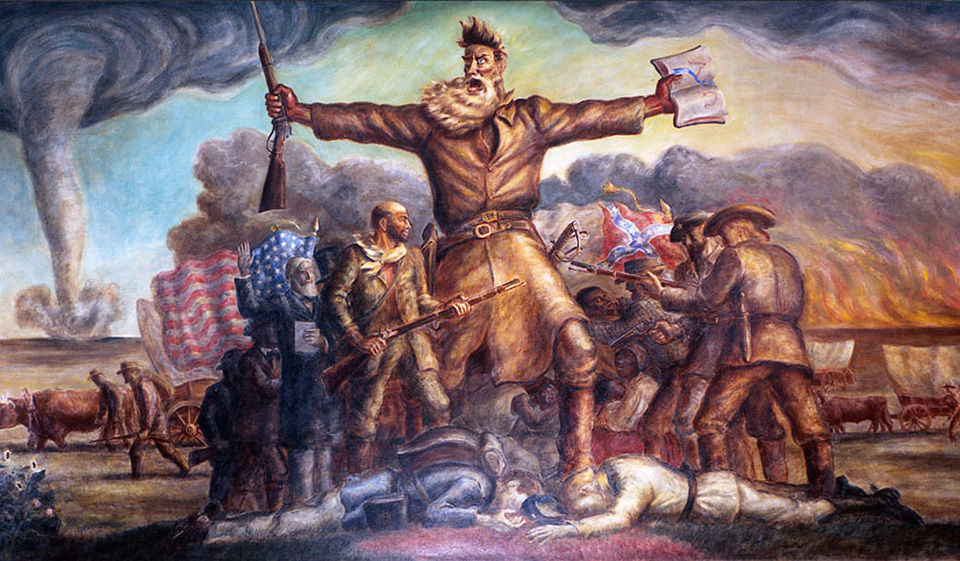
Harpers Ferry: October 16, 1859
16 whites and 5 blacks
-took 2 days to capture
-Word was then send to the southern government where Robert E. Lee accompanied by state and federal troops recaptured the fort in 7 minutes
The Aftermath: December 2, 1859
-hung in Virginia
-Seen as martyr in the pursuit of freedom for a cause that seemed impossible to others
-Sparked uprisings on plantations and political disputes to take action in the union
-Put fear in the south that the slaves could in fact revolt since the population is 60% black and 40% white below the Mason-Dixon Line.
Quotes:
“. . . . I believe to have interfered as I have done, . . . in behalf of His despised poor, was not wrong, but right. Now, if it be deemed necessary that I should forfeit my life for the furtherance of the ends of justice, and mingle my blood further with the blood of my children, and with the blood of millions in this slave country whose rights are disregarded by wicked, cruel, and unjust enactments, I submit: so let it be done."
To the crowd before he was hung publicly in Virginia
“I acknowledge no master in human form”
In a prison interview before he was hung
“I, John Brown, am now quite certain that the crimes of this guilty land can never be purged away but with blood. I had, as I now think, vainly flattered myself that without very much bloodshed, it might be done.”
Written on a note to a reporter on his way to be hung
Comments